
Advice for estate owners considering MMC: 5 must-know tips before you commit
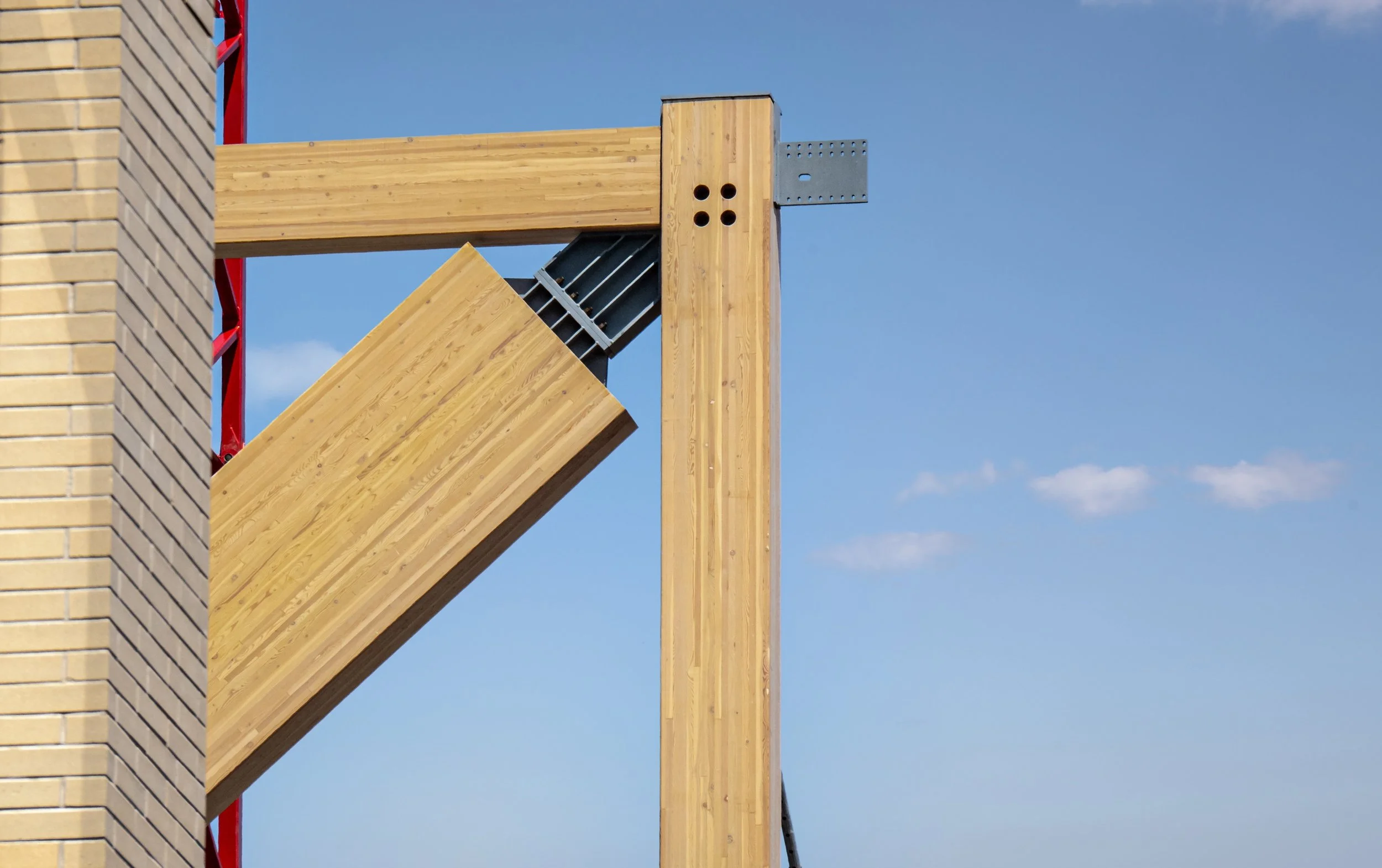
Using Modern Methods of Construction (MMC) as an alternative to - or alongside - traditional methods is increasingly being adopted by estate owners as a way to accelerate delivery, boost efficiency and reduce waste and carbon emissions. Manufacturing or assembling elements of the build off site, under factory conditions, can increase quality control, provide more predictability in terms of cost and build schedule, and minimise on site disruption.
Data from Glengian shows there has been a gradual increase in the number of projects using MMC approaches - from around 9% in 2017 to 16% in 2023. Although MMC tends to be used in a higher volume of residential projects over commercial (24% vs 15%), there is a clear upward trend - particularly with the industrial and education sectors, where clients are typically looking for more efficient, lower-impact ways to build.
For estate owners, however, the question isn’t just how fast a building can be delivered, but how well it will perform over decades. Long-term durability, adaptability and whole-life value matter more than just the speed of construction. With this in mind, MMC can be an excellent approach - but only when systems are selected, designed and certified for permanent, estate-grade use.
Below are five key considerations for estate owners evaluating MMC.
Prioritise long-term durability and maintenance
As long term guardians of land, rather than short term developers or investors, estate owners need buildings that are adaptable, reliable, and that will hold their value over time. When assessing whether MMC is the right approach for a project, questions to consider might include:
● Will this MMC system last as long as traditional construction?
● How easily can components be repaired or replaced in 20 - 50 years?
● Is the system resilient to weathering, moisture, and wear?
Although one of the most attractive aspects of MMC is that it enables fast construction, estate owners should insist on systems with proven lifespan data.
MMC can be aligned with planning, heritage and aesthetic requirements
John Bailiss, Founder of Bailiss & Co notes: “MMC systems can sometimes be perceived to be rigid or limited in their capacity or modular form, but in reality, systems range from prefabricated 3D volumes to 2D CLT plates, and many elements can be adapted at factory level to give bespoke performance while maintaining the overall system benefit.
“For example, modifying individual elements within a prefabricated module to avoid the need for double structure - and the associated space and foundations - is often entirely achievable. As with utilities and tunnels, once you understand the system and its constraints, the “standard rules” don’t always apply and can often be negotiated to meet conservation and aesthetic requirements.”
Design for supply chain stability, not just technical performance
MMC is as much about consistent manufacturing, specialist installers and predictable logistics as engineering, so it makes sense to design for the supply chain you actually have. As an approach, MMC works best when you use what you already know: proven systems that are already widely manufactured and are familiar to your supply chain, rather than one-off bespoke solutions.
4. Check the impact on asset value, risk and insurance early
One of the most important considerations for estate owners is how an MMC system affects long-term value, insurability and mortgageability. Not all MMC systems are treated equally by insurers, lenders or valuers, and selecting the wrong approach can limit future funding options or reduce asset liquidity.
The experience of the Leishenshan Hospital in Wuhan illustrates the importance of matching the MMC system to the required lifespan. The hospital was designed and built in just 12 days, enabled by a highly coordinated supply chain and modular system designed specifically for short-term, emergency use. While this demonstrates what MMC can achieve under extreme conditions, the same system would not have met long-life durability or certification requirements expected on an estate.
For estate owners, speed of delivery should never come at the expense of asset permanence, resilience or long-term value. Early engagement with insurers, valuers and structural engineers ensures the chosen MMC approach supports - not compromises - the estate’s long-term investment strategy.
5. Choose an MMC system that supports adaptability and whole-life performance
Estates evolve, and buildings must evolve with them. To support future adaptability, the correct MMC system must be selected, and designed with potential future change, expansion or reconfiguration in mind - for instance, supporting phased estate development by minimising disruption to tenants and local communities, enabling work to continue while parts of the estate remain fully operational.
MMC can work extremely well for long term estate needs, but success relies on early structural advice, careful specification, and a realistic assessment of supply chain stability and whole-life performance.
To find out more about our approach to MMC and some of the projects we’ve worked on, get in touch.