
Estates think in blocks. Refurbs still don't.
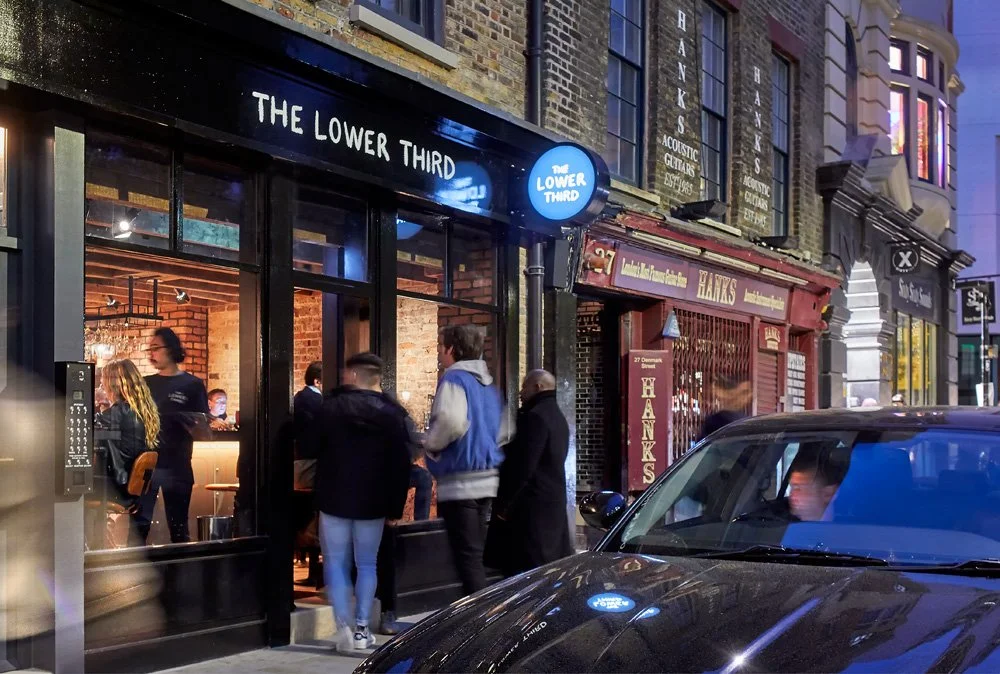
Most London buildings were designed in isolation. Most are still refurbished in isolation. But London's great estates don't own buildings in isolation. They own blocks. Streets. Squares. Whole neighbourhoods. The structural opportunity that creates is the one only the estates are placed to take.
Take a typical Georgian or Victorian terrace block. It might hold ten to fifteen buildings, but ownership often splits it into consecutive runs of five to eight, and that run is the natural unit to work with. Each building has its own stair, sometimes a lift, sometimes not. Each is independently stable. Each with its own services, its own back-of-house, its own awkward rear elevation. Treated individually, every refurb is constrained, you can't take the stair out because the building falls over, the lift won't fit because the building's too narrow, the floor plate stays cellular because every building has a core sitting in the middle of it.
Treated as a block, almost all of that opens up.
Put proper new cores at each end. The middle buildings lean on them for stability, and the floor space the old stairs occupied comes back as usable area, often close to 10% across a typical block. The end buildings get modern accessible cores with lifts, which most of the existing buildings will never accommodate on their own.
Link through party walls and you get linear floorplates spanning three or four buildings. Big enough for commercial tenants who wouldn't look at any of the buildings individually. Better residential layouts. Fewer corridors, fewer dead corners.
Stack the whole block by use, rather than each building individually. Commercial at ground, offices above, residential on top. Acoustic separation works better, the most valuable floor area sits where the natural light is strongest, and you stop putting flats over restaurants just because the building happened to be wide enough.
Floor levels rarely match across linked buildings. Sometimes that’s character worth keeping, a half-step between sections that gives spaces their identity. Sometimes specific floors are worth realigning at structural cost: the ground plane for commercial frontage, the principal residential storey for daylight and ceiling height. Telling one from the other is engineering judgement – that’s what we’re here for.
Underneath, the same logic applies. Six separate basement extensions is a party-wall negotiation six times over, and six rounds of dewatering. One coordinated excavation is cheaper, faster, and delivers a single connected sub-level useful for plant, MEP, cycle stores, deliveries, the functions that are currently eating ground-floor frontage.
Services follow. Plant, substations, switch rooms and risers consolidated once rather than duplicated five times. Rooftops freed up for amenity or PV rather than chillers.
And then the rear. Most of these buildings have a beautifully maintained front and a deeply disappointing back, light wells filled with cables, fire escapes bolted on in the 70s, plant strapped to brickwork, lean-tos no one will own up to. At block scale you can rationalise it: a coherent rear elevation, a shared service yard, possibly a courtyard worth looking at. The gain in space, light, and amenity is often as significant as anything happening at the front.
The consent route is easier at block scale too. Listed building consents land more readily when you can demonstrate net heritage gain across the group, remove a poor 1970s insertion here to justify a more ambitious move there. It’s a hand, individual owners simply don’t hold.
None of this is structurally complicated. It is structurally coordinated, which is a different thing. It needs an engineer involved early - before plans are drawn - to work out which buildings carry the cores, which floors align, where the lateral load goes, what the foundations can take. Decisions made building-by-building close off options that block-thinking opens up.
It starts with honest appraisal of what’s already there. Buildings within a block aren’t equal, some have generous floor-to-floor heights, sound foundations, capacity in the existing frame; others are tired, undersized, or compromised by earlier interventions. The strategy is to put the heaviest work - new cores, basement extension, lateral stability - where the buildings are weakest. Where capacity already exists, match uses to it rather than fight it. Existing first, natural where you can, everything else where it has to go.
And the tenants. Many of these blocks carry businesses and households that have trusted the estate for generations, restaurants, makers, residents whose location is part of the value. The structural strategy has to make room for them: temporary moves between buildings, phasing that keeps trading going, sequencing along the street where the address itself matters. The space they return to has to be better than the one they left. Tenants belong inside the structural strategy, not outside it.
The estates have always thought in centuries. The structural argument is that the buildings they hold are more flexible, more connectable, and more valuable than the way they're usually refurbished suggests. The block is the unit of opportunity. The building is just where the work happens.
Get in touch to find out more about the team, or head over to Portfolio to see some of the recent projects we’ve worked on.