
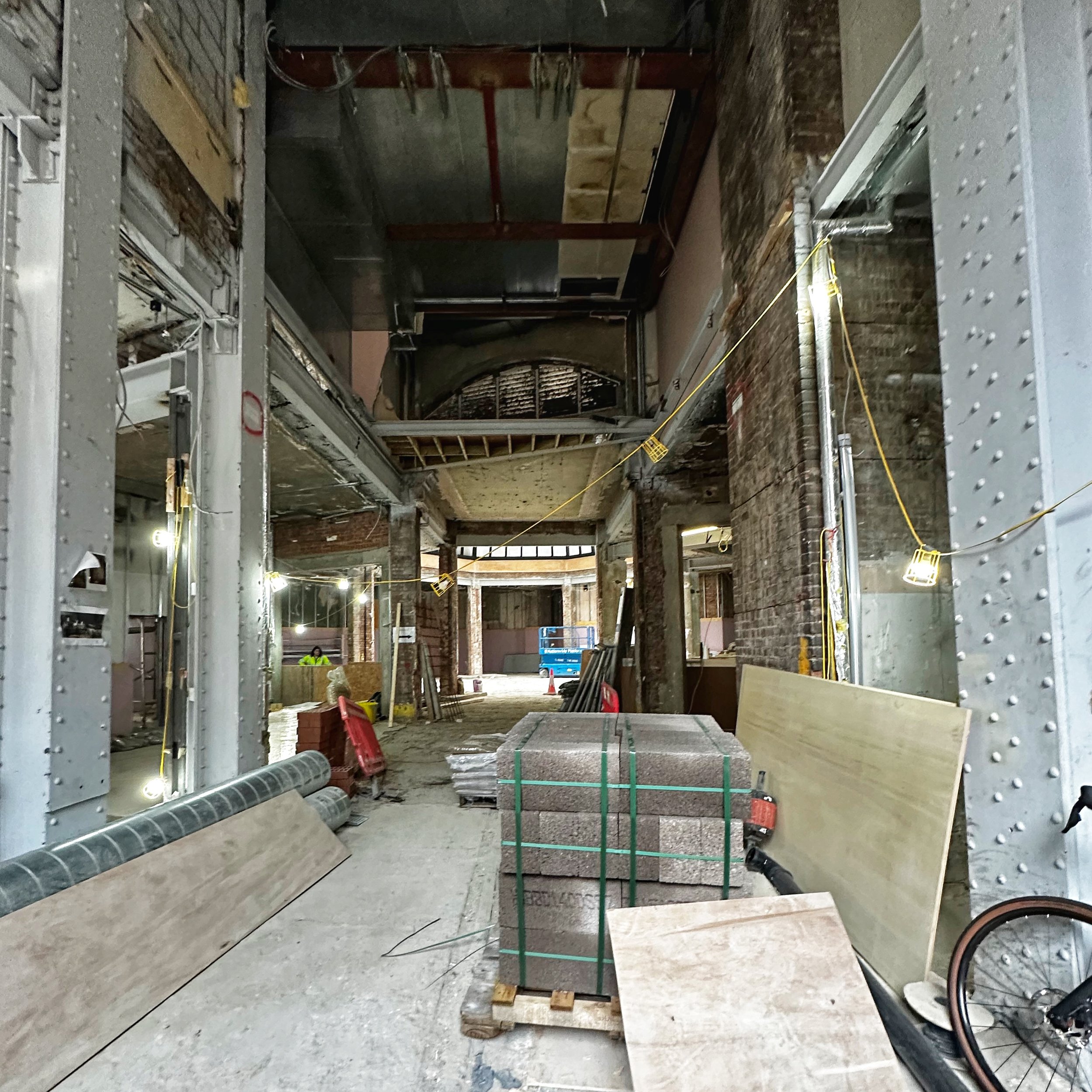
The adage that ‘change is the only constant in life’ is certainly true for buildings. Rarely static for long, what starts as office space may later become residential, retail can turn into workspace, and industrial units may evolve into mixed-use developments. Even if a building has a single use throughout its lifecycle, its layouts and occupancy patterns will shift over time.
Buildings might best be thought of as a series of layers with different lifespans - structure, skin, services and space - rather than one large, inflexible object. When the layers are understood independently, it becomes easier to adapt or upgrade elements without extensive intervention. The structural frame, typically the longest-lasting component, must provide a stable but flexible backbone.
But structural design is often still approached as though a building’s first use will be its only use. Designing structure around future change needs a broader mindset - balancing what the building needs to do today with what it may be asked to do in ten, twenty or fifty years’ time. At its best, structural engineering provides the framework that allows buildings to adapt without unnecessary cost or disruption.
Why adaptability matters
Change is driven by evolving workplace models, planning policy, sustainability targets, technological advancement and market demand, and as a result building obsolescence is accelerating. Few developers intentionally create inflexible buildings, but short-term efficiency can unintentionally limit long-term opportunity.
When structural design is engineered around a single layout or idea, future alterations can become complex; in contrast, buildings designed with structural foresight tend to retain their value and utility for longer. Adaptability is not about overdesign; it is about informed, balanced decisions at the outset, aligned with realistic lifecycle scenarios.
Structural strategies that support change
Engaging structural engineers early will ensure the fundamentals are in place for future flexibility.
Grid and span selection significantly influence how easily a building can be reconfigured. Regular, rational grids typically provide greater freedom for future planning changes than irregular or highly constrained layouts. Span lengths should balance material efficiency with practical flexibility, considering how spaces might be subdivided or combined over time.
Floor-to-floor heights are another critical factor. Efficient but generous structural zones allow for future services upgrades, changes in environmental strategy or even change of use. Retrofitting new systems into constrained floor depths is often one of the greatest barriers to adaptation.
Load capacity and robustness also warrant careful thought. Although not economical or sustainable to design for every hypothetical scenario, having a strategy in place to allow for potential load increases means a structure can be strengthened in the future if needed.
Core positioning and stability systems should be considered strategically. Poorly located stability elements can restrict planning flexibility, whereas well-considered arrangements can enable a variety of internal configurations over time. Stair and lift cores are essential, along with subtle perimeter elements that are often hidden on Party Wall lines.
These decisions require early discussion about lifecycle intent and the level of flexibility appropriate to the building’s context.
Designing with reuse in mind
The industry’s growing focus on embodied carbon reinforces the importance of longevity and reuse. As we explored in a previous article, the most sustainable structure is often the one that doesn’t need to be replaced.
For new buildings, this means considering how structural components might be adapted or retained in the future, and in some cases even removed for reuse or recycling
For existing buildings, careful structural appraisal often reveals more opportunity than first assumed; targeted strengthening or revised loading strategies can unlock potential while preserving much of the original fabric, again highlighting the necessity for structural input before design assumptions become fixed.
The value of early collaboration
Designing for change depends on collaboration between client, architect and engineer from the earliest stages; not achieved in isolation. When structural strategy is considered alongside planning and servicing concepts, it becomes possible to embed flexibility without compromise, but when structural input is delayed, opportunities for efficient adaptability can be lost.
At Bailiss & Co, early engagement allows us to test structural options against both immediate requirements and longer-term scenarios. By understanding the client’s commercial objectives and the building’s wider context, we can help shape solutions that balance efficiency with resilience.
Building for what comes next
No building can anticipate every future demand: markets shift, technologies evolve and regulations change in ways that are difficult to predict, but structural design that acknowledges the likelihood of change is more likely to support long-term performance.
Adaptable buildings tend to remain viable for longer, accommodate evolving uses more readily and require fewer carbon-intensive interventions over their lifetime. A building’s first chapter is rarely the end of the story - and thoughtful structural engineering can ensure it continues to perform, whatever comes next.
To find out more about how we work with clients, get in touch.